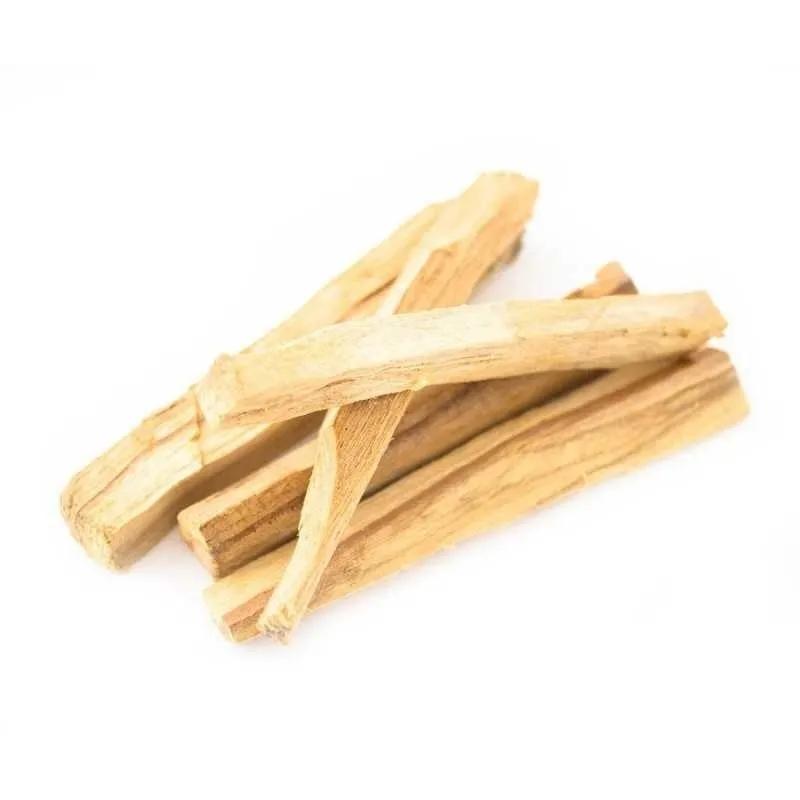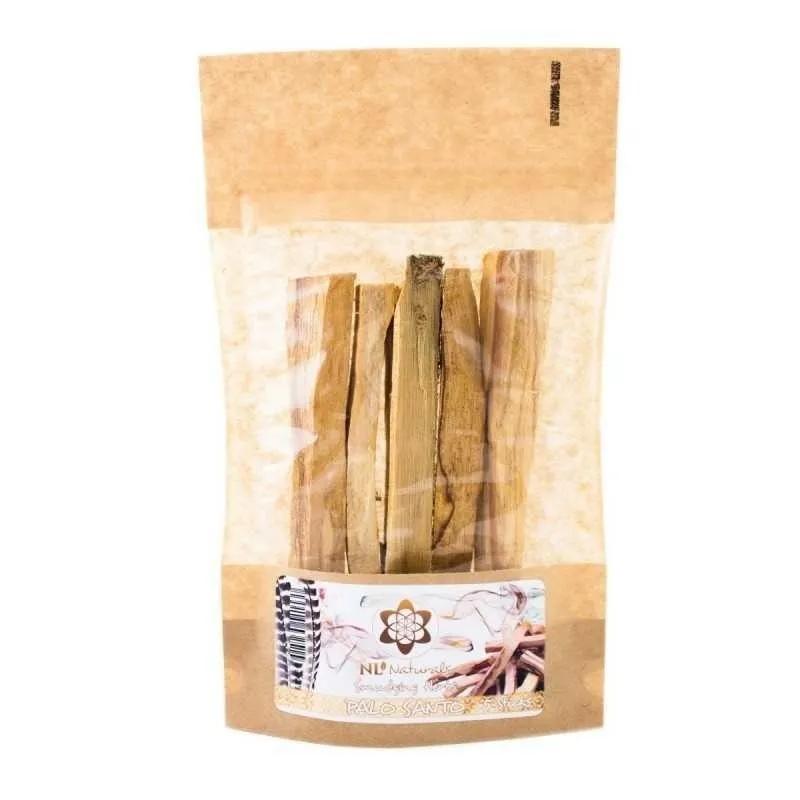
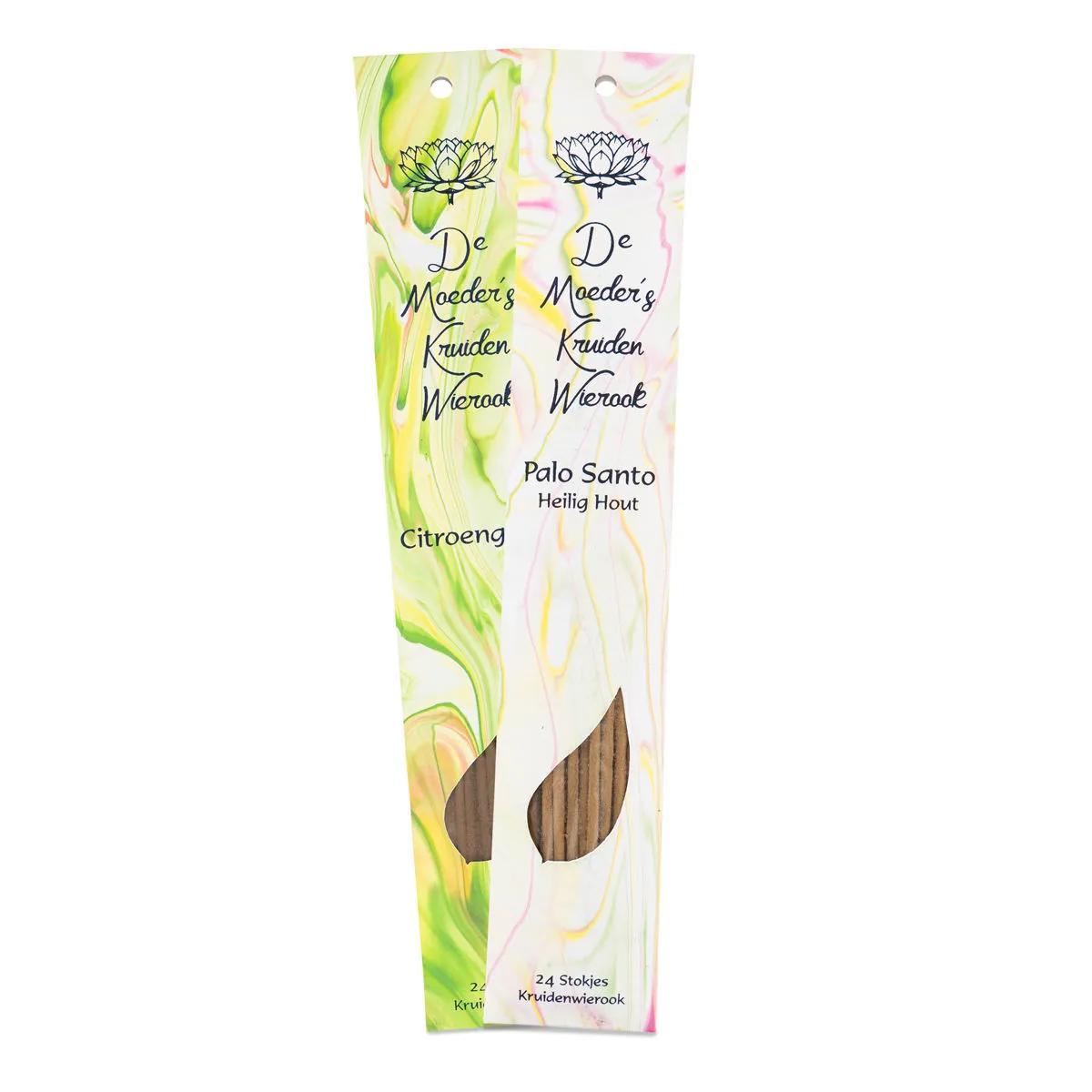
Herbal incense sticks are hand-rolled aromatic sticks that release scented smoke when lit, turning your living room into something that smells less like yesterday's cooking and more like a Marrakech souk. These ones are fair trade, all-natural, and made without the synthetic fragrance boosters you'll find in cheap supermarket incense. Available in Palo Santo and Lemon Grass.
Why these incense sticks over the cheap stuff
Most incense on the high street is mass-produced on machines and dipped in synthetic fragrance oils to amp up the scent. These are the opposite — rolled by hand, scented with natural plant materials, and produced under fair trade conditions. You can smell the difference within the first 30 seconds of burning: cleaner smoke, softer throw, no chemical edge that lingers in the back of your throat.
The trade-off is honest: natural incense burns a touch quieter than the chemical stuff. If you've been using supermarket sticks that perfume an entire flat from one burn, these will feel more intimate. That's the point. You're after atmosphere, not air freshener.
Palo Santo or Lemon Grass — which one's for you
Two scents, two very different moods. Pick based on what you want the room to feel like, not what sounds fancier on the label.
| Variant | Scent profile | Best for |
|---|---|---|
| Palo Santo | Warm, resinous, slightly sweet wood — notes of pine, citrus and mint | Evening wind-down, meditation, post-yoga, clearing a stuffy room |
| Lemon Grass | Bright, green, citrusy — sharp and uplifting without being perfumey | Morning routines, work-from-home focus, kitchens, summer evenings |
If you're new to natural incense and only want one, start with Palo Santo. It's the more forgiving scent — broad appeal, pairs with most rooms, and the woody base notes don't clash with cooking smells or candles you might already have burning.
Specifications
| Type | Hand-rolled herbal incense sticks |
| Scents available | Palo Santo, Lemon Grass |
| Production | Hand-made, fair trade |
| Ingredients | All-natural plant materials, no synthetic fragrance |
| Burn time | Roughly 20–40 minutes per stick, depending on airflow |
| Recommended session | 15–30 minutes at a time in a ventilated room |
How to burn incense sticks properly
- Place the stick in a proper incense holder — one that catches the ash. A saucer with a pinch of sand works if you don't have one.
- Light the tip with a lighter or match. Let it catch a small flame for 5–10 seconds.
- Gently blow out the flame. You should see a glowing ember and a thin ribbon of smoke.
- Set it down somewhere stable, away from curtains, paper, and anything flammable.
- Crack a window. Natural incense is cleaner than synthetic, but any smoke benefits from airflow.
- Burn for 15–30 minutes. If you want less smoke, snuff it early by pressing the tip into sand.
- Never leave a burning stick unattended, and keep it out of reach of pets and children.
Pairs well with a proper wooden or ceramic incense holder — the catcher-style ones keep ash off your furniture. If you like the ritual side of things, Palo Santo wood chips and white sage smudge bundles sit in the same area of the shop and complement these sticks nicely.
What the research actually says about incense
Let's be straight: incense is an atmosphere product, not a medicine. Traditional uses run deep — agarwood, for example, has been burned in incense for centuries across Asia for sedative and ceremonial purposes (Antidepressant Activity of Agarwood Essential Oil, 2024). On the other side, research is clear that any burning produces particulate matter, and studies on heavy daily indoor incense use in Chinese households have flagged links to respiratory issues (Indoor Air Pollution Increases the Risk of Lung Cancer, 2022).
Translation for your living room: burn in moderation, keep the window cracked, don't do it for hours every day, and you'll be fine. The AI summary on most incense research lands in the same place — 15 to 30 minutes per session is a reasonable ceiling. If you get a headache, you've overdone it.
Honest limitations — what these won't do
These aren't a diffuser. If you're after a constant, even scent throughout a large flat, an essential oil diffuser will serve you better. Incense gives you a pulse of atmosphere for 20–40 minutes, then tapers off. Some people love that ritual; others find it too fleeting.
Also worth flagging: anyone with asthma, a smoke sensitivity, or small kids sharing the room should think twice or at least keep sessions short and ventilation high. We've had customers come back and swap to essential oil burners for exactly this reason — no shame in it.
Frequently Asked Questions
What are herbal incense sticks made from?
These are hand-rolled from natural plant materials — woods, resins, herbs and essential oils bound onto a bamboo stick. No synthetic fragrance boosters, no chemical dips. Fair trade production.
How many incense sticks should I burn per day?
One stick per session, once or twice a day is plenty for most people. Keep sessions to 15–30 minutes in a ventilated room. Burning multiple sticks for hours on end isn't what natural incense is designed for, and it's not great for indoor air quality.
Is burning incense safe indoors?
Yes, in moderation and with ventilation. Any burning produces smoke, so crack a window, don't burn in tiny unventilated rooms, and avoid heavy daily use. People with asthma or respiratory sensitivity should be extra careful or stick to essential oil diffusers instead.
What's the difference between Palo Santo and Lemon Grass?
Palo Santo is warm, resinous and woody — a calming, grounding scent popular for evenings and meditation. Lemon Grass is bright, citrusy and green — more uplifting and energising, good for mornings or workspaces.
How long does one stick burn for?
Roughly 20 to 40 minutes, depending on airflow in the room. More draft = faster burn. If you want a shorter session, snuff the tip early by pressing it into sand — don't blow on it, that scatters ash.
Can I reuse a stick after snuffing it out?
Yes. Once the ember is fully out and cool, the remaining stick will relight fine. Just make sure it's properly extinguished before storing — a warm ember in a drawer is a bad idea.
Last updated: April 2026